If you’ve lived in Abu Dhabi for more than one summer, you’ve probably asked yourself at least one of these three questions, usually at the worst possible moment. Your AC starts blowing warm air in July. A pipe under the sink starts dripping at 11 pm. Or your TAQA bill lands and it’s somehow AED 400 higher than last month, and you have no idea why.
At Selex, these are some of the questions we get asked most as a home maintenance company in Abu Dhabi; usually by phone, usually when someone’s already a little stressed. So instead of making you dig through forums or guess, here’s what actually causes each one and what to do about it.
How Often Should You Really Service Your AC in Abu Dhabi?
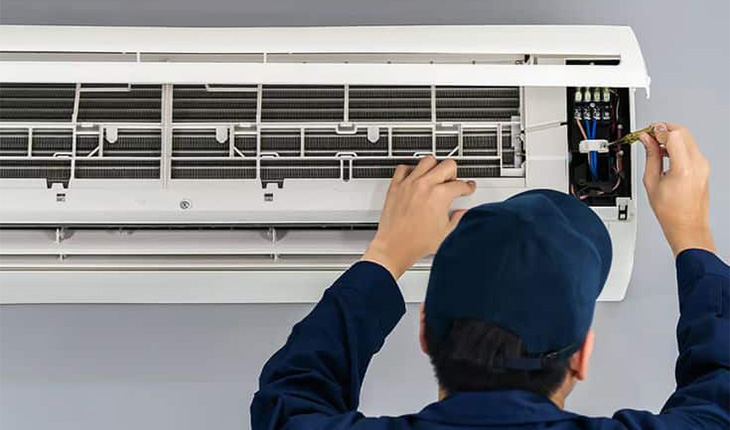
Short answer: at least twice a year, ideally right before and right after summer. If you live in a villa, run your AC almost non-stop, or you’re near a construction site, bump that up to every three months.
Most AC maintenance advice online is written for climates that aren’t Abu Dhabi. A “service it once a year” schedule might work fine in London. It doesn’t work here, for a few reasons:
- Our units run for six, seven, sometimes eight months a year without a real break, roughly double what a typical residential AC deals with in a milder climate.
- Fine desert dust works its way into filters and coils within weeks, not months.
- Coastal humidity adds extra strain on the dehumidifying function, on top of the cooling load.
The practical schedule looks like this:
- One full service in March or April, right before the heat kicks in.
- A second service in October or November, once summer’s worst is over, to catch wear before it becomes a bigger repair.
- Villas or households running AC around the clock: switch to quarterly servicing (every three months), with a quick filter check in between.
Don’t wait for the calendar if you notice any of these:
- Your electricity bill jumps with no change in habits.
- Water pooling near the indoor unit.
- Ice forming on the refrigerant lines.
- Airflow that’s noticeably weaker than usual.
Any one of these is worth a call, regardless of when your last service was; it’s the kind of thing our technicians at Selex end up fixing far more often than they’d like, simply because someone waited it out.

When Is a Plumbing Problem Actually an Emergency?
Not every leak means dropping everything and calling for help at midnight, but some absolutely do, and knowing the difference can save you thousands of dirhams in water damage.
Call immediately if:
- There’s active flooding, a burst pipe, or water spreading toward walls, floors, or an electrical outlet. Shut off the main water valve first if you can reach it safely, then call.
- Sewage is backing up into a sink, tub, or toilet. Stop using any fixtures on that line until someone arrives; this is a health hazard, not just an inconvenience.
- Your home suddenly has no water at all, with no known outage.
- Hot water disappears out of nowhere, rather than gradually fading.
- You smell gas anywhere in the house. This isn’t technically plumbing, but it’s just as urgent: don’t touch a light switch, don’t use your phone indoors, get everyone out, and call Abu Dhabi Civil Defense on 998 before calling anyone else.
These can usually wait for a normal appointment:
- A slow or gurgling drain
- A dripping tap
- A toilet that takes a bit longer to fill
Still worth booking — slow drains rarely fix themselves — but there’s no need to pay emergency rates for something that isn’t actively getting worse by the hour.
Why Did Your Electricity Bill Suddenly Spike?
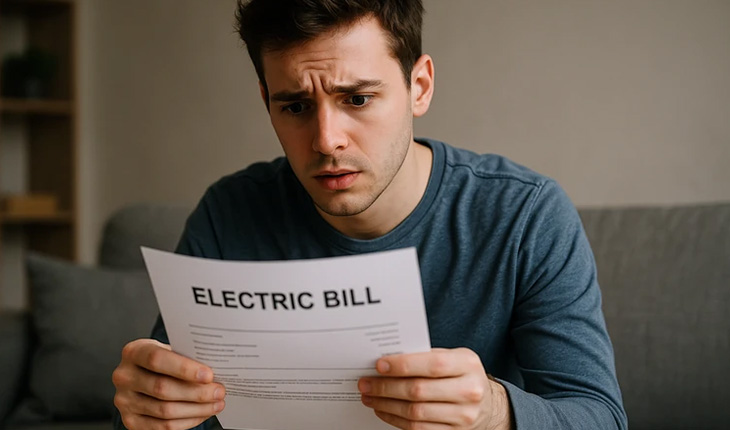
Nine times out of ten in Abu Dhabi, the answer traces back to your AC. A dirty filter or low refrigerant forces the compressor to work harder and run longer to hit the same temperature, and that extra strain shows up on your bill weeks before you’d notice any change in how the unit sounds or feels.
A few other things worth ruling out:
- The tariff band shifted. TAQA Distribution (the merged entity that replaced ADDC and AADC) bills daily electricity uses within a set allowance at a lower “Green Band” rate, and anything above that threshold at a higher “Red Band” rate. A stretch of hot days, or guests staying over and running the AC more, can tip a household into Red Band pricing for the whole billing cycle; not just the hotter days.
- The bill was estimated, not measured. If your meter wasn’t read that month, TAQA issues an estimated bill, corrected once an actual reading comes in. This alone can make one month look oddly high. Check your real, live consumption anytime through the TAMM app or your TAQA account.
- A hidden electrical fault. Old wiring, a failing appliance, or an overloaded circuit can draw extra current without tripping anything or showing obvious damage.
The quickest way to tell what’s actually going on:
Pull up the same month’s bill from last year and compare. A real, unexplained jump almost always points to something mechanical or electrical — not just “using more electricity” — and that’s exactly the kind of thing a quick inspection can settle in one visit.
Dealing with any of this right now? Selex handles AC servicing, emergency plumbing, and electrical inspections across Abu Dhabi, seven days a week.