Stand in your living room long enough staring at that scratched-up floor, and you’ll start asking yourself the same question every homeowner eventually asks: do I fix this, or do I rip it all out? It’s a fair question, and the honest answer is “it depends.” Sometimes a tired-looking floor just needs a good polish. Other times, what looks like a small scuff is actually your subfloor waving a red flag. Here’s how to actually tell which one you’re dealing with, and why that answer looks a little different if you live in Abu Dhabi.
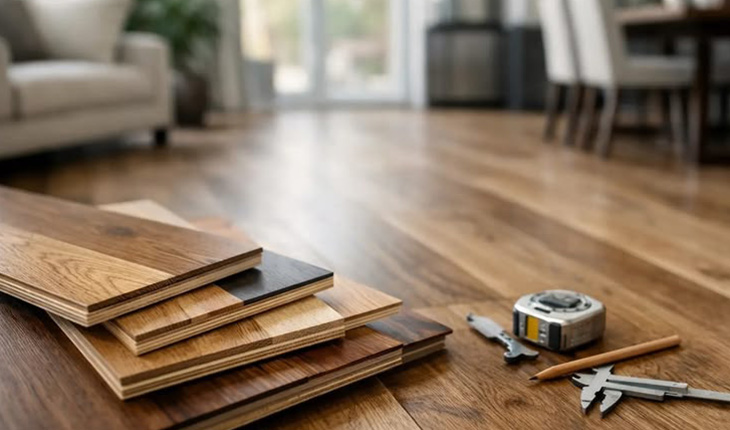
Signs You’re Looking at a Repair, Not a Replacement
Before you panic and start pricing out new floors, know this: most flooring issues are smaller than they look.
- Light scratches, dull patches, general wear from years of foot traffic- this stuff almost always responds to sanding or polishing. No need to tear anything up.
- One cracked tile or a bit of crumbling grout? That can usually be patched or swapped out on its own, without disturbing the rest of the floor.
- Damage that’s small and stays in one spot is a repair job nine times out of ten.
If the problem is contained and mostly cosmetic, call in a professional for a repair first. It’ll save you both time and money.
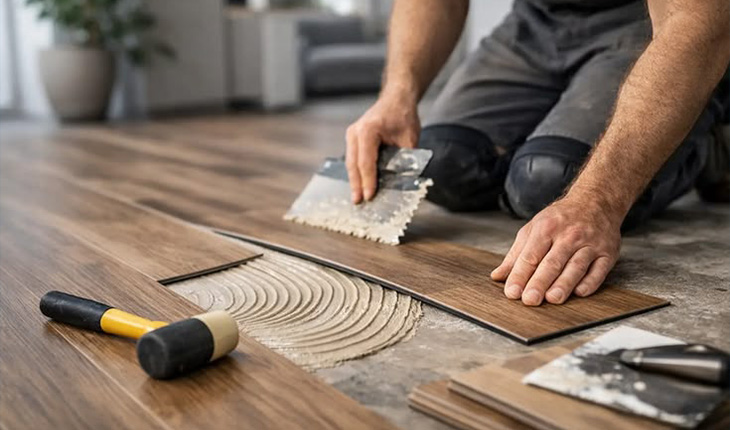
When Should You Replace Your Flooring? Here Are the Signs
Then there’s the other side of things, damage that repair simply can’t keep up with:
- If your flooring is stained, warped, cracked, or torn in more than one place, that’s not a coincidence. That’s a floor telling you it’s done.
- Deep gouges or scratches spread across a wide area (not just one corner) usually mean it’s time for something new, not another patch job.
- Ever notice your floor feeling soft or a little spongy underfoot, almost bouncy compared to the rest of the room? That’s often a sign the subfloor underneath has taken damage.
- Buckling, cupping, or any kind of warping is basically moisture’s calling card. And with hardwood specifically, if the cracks run deep or the floor’s already been refinished two or three times, sanding it again probably isn’t worth it anymore.
- Bumps and dips you can actually feel while walking usually point to an uneven or sinking subfloor.
Here’s a rule worth remembering: once damage covers more than 30% of your flooring, replacing the whole thing is almost always cheaper in the long run than fixing bits and pieces over and over.
How Long Should Your Flooring Actually Last?
It helps to know roughly what lifespan you’re working with, because sometimes a floor isn’t damaged; it’s just old.
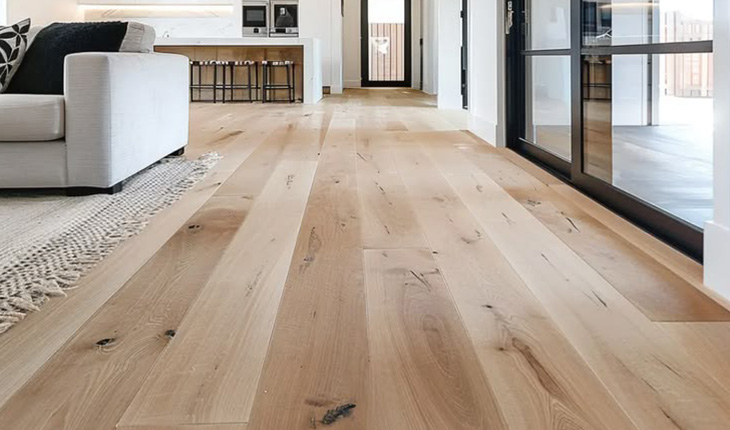
- Solid hardwood can last 50 to 100+ years, and typically gets refinished 4 to 6 times over its life.
- Ceramic and porcelain tile hold up for 50 to 75+ years, though the grout usually needs redoing every 10 to 15 years.
- Good-quality LVP lasts around 20 to 30 years; cheaper versions can wear out in under 10.
- Good-quality laminate typically lasts 15 to 25 years.
- Carpet is on the shorter end, anywhere from 5 to 15 years depending on the material and how much traffic it sees.
When Water Is Involved, Everything Changes
If water is part of your flooring problem, don’t treat it like a cosmetic issue. This is where things get serious, fast.
Mold can start forming in as little as 24 to 48 hours after a leak or excess moisture sits around, which is exactly why quick drying matters so much. Health authorities are pretty blunt about this too: any type of mold can affect your health, so the goal isn’t figuring out which species it is; it’s getting rid of it.
Studies have connected mold exposure to breathing problems, allergies, and asthma flare-ups, and kids and older adults tend to feel it the most. What makes flooring tricky is that the layers underneath (Wood, Paper, or Adhesive) can stay damp long after the room above looks perfectly dry.

The Abu Dhabi Factor: Why Your Tiles “Tent”
This next part is worth paying attention to, because it’s something a lot of homeowners here have never even heard of: tile tenting.
Between the intense sun, the heat, and Abu Dhabi’s swinging humidity levels, tiled floors are under constant pressure to expand, especially in rooms that get direct sunlight or sit along exterior walls. Nine times out of ten, the real cause is missing movement joints. Tile needs somewhere to expand into, and when it doesn’t have that room, the pressure has to go somewhere. It pushes upward, forming that tell-tale “tent” shape across the floor.
If you suddenly hear a pop underfoot, or notice your tile sounding hollow after any kind of water leak, don’t shrug it off. That hollow sound usually means pressure is already building beneath the surface, and in Abu Dhabi’s heat and humidity, it tends to escalate faster than it would somewhere drier.
So, Repair or Replace?
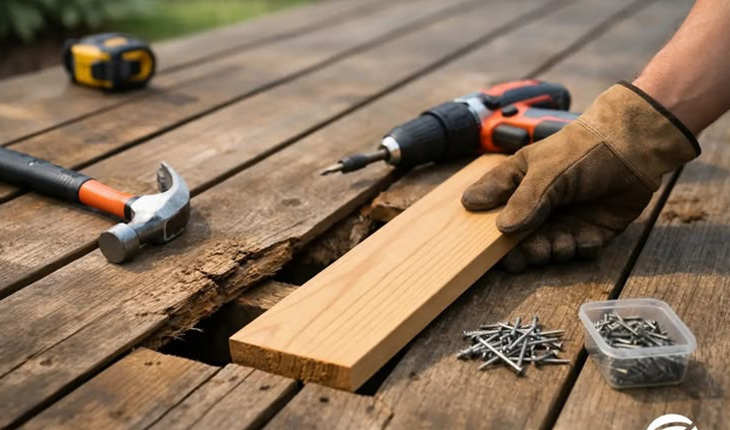
- Small, contained surface damage? Go with a repair.
- Damage spread across more than 30% of the floor? Replacement will save you money in the long run.
- Soft spots, hollow sounds, or a musty smell? Get it inspected before you decide anything. The real damage might be hiding under the surface.
Still Not Sure Which One Applies to You?
Getting this call wrong can get expensive, and in Abu Dhabi’s climate, flooring problems have a habit of escalating quicker than most people expect. Selex’s home maintenance team inspects your flooring, figures out whether you’re dealing with a cosmetic issue or a structural one, and points you toward whichever option actually makes sense: repair or replacement. And if there’s moisture or tile tenting involved, we move fast, before it turns into a much bigger and pricier headache.
Book a flooring inspection with Selex today and get a straight answer on what your floor really needs.