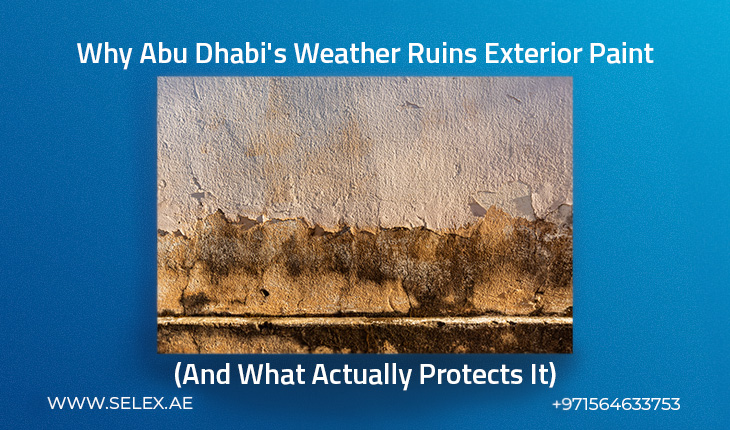
If you’ve painted your villa’s exterior in Abu Dhabi and watched it fade, crack, or peel within two or three years, you’re not imagining things, and you’re definitely not alone. Abu Dhabi’s climate is uniquely brutal on exterior surfaces, and most homeowners never find out why until the paint job has already failed. Understanding the science behind that failure is the first step to avoiding it the second time around.
A Climate Built to Break Paint
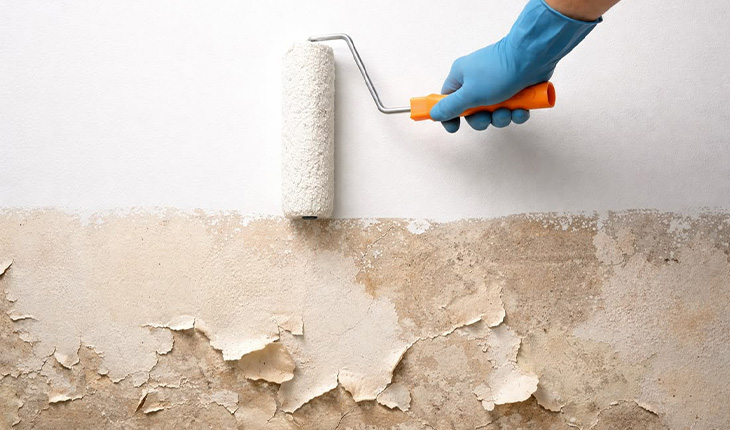
Abu Dhabi sits in a hot desert climate, with average yearly temperatures around 30°C and summer highs that regularly push past 40°C in July and August. That heat alone isn’t the whole story, though. What really punishes exterior paint is the swing; building facades can shift by as much as 20°C between the blazing midday sun and the cooler night air. That constant expansion and contraction is what engineers call thermal shock, and over time, it’s a major reason paint starts cracking and lifting off the surface.
Then there’s the humidity problem, and location matters more than people realize. Abu Dhabi’s average relative humidity hovers around 61% year-round, ranging from roughly 52% in May to 69% in January, but that number hides the real story for anyone living near the water. Because the city sits on a cluster of islands in the Gulf, humidity stays elevated year-round regardless of how far inland the desert setting suggests. Coastal neighborhoods — Al Reem Island being a prime example — see overnight humidity spike as high as 90%. That’s when the real damage happens. Moisture creeps into painted surfaces while everyone’s asleep, and by morning the paint film has already started absorbing water it can’t get rid of.
UV Rays: The Silent Paint Killer
UV exposure is arguably the most underestimated threat to exterior paint in the UAE. Abu Dhabi’s UV Index climbs into the “very high” to “extreme” range for most of the year, peaking around 13 in July, and even outside peak summer, midday readings often sit at 10 to 12. That level of sun exposure breaks down the chemical binders inside standard paint, a process known as chalking; the paint develops a dusty, faded surface and gradually loses its protective seal. Cheaper paints made with organic pigments are especially vulnerable, sometimes showing visible fading and chalking within just 24 months, which is a fraction of what a well-prepped, quality job should last.
What About Sandstorms?
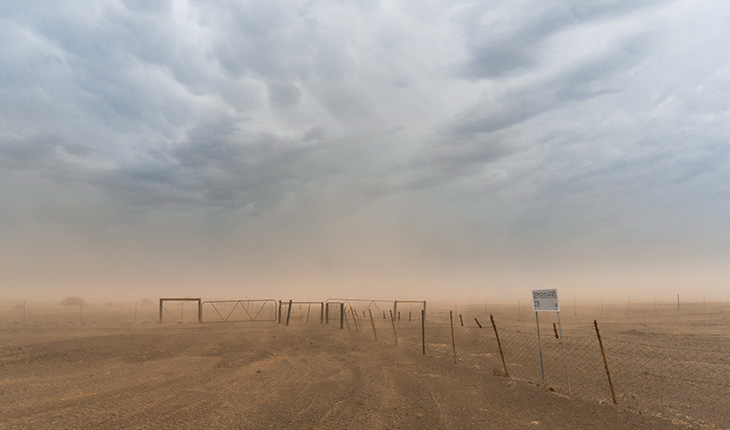
Here’s something most Abu Dhabi maintenance articles get wrong: true sandstorms aren’t actually that common. Airport records show an average of only about 3 dust storm days per year. What’s far more relevant is the near-constant low-grade haze — hazy, dusty conditions occur on roughly 242 days annually — combined with the Shamal winds that blow almost continuously through June and July. Those winds add mechanical wear on top of everything else, acting like fine sandpaper and gradually stripping microns off the paint film, which exposes the surface underneath to moisture. It’s not the dramatic storm that wears your paint down. It’s the everyday grind of dust, wind, and heat working together, month after month.
Why Most Paint Jobs Actually Fail
Here’s the number every Abu Dhabi homeowner should know: an estimated 70% of exterior paint failures in the UAE trace back to poor substrate preparation, not to the paint itself. Skipping crack filling, sanding, and priming before painting is the single biggest reason a paint job doesn’t last, no matter how expensive the paint can was. It’s a detail that’s easy to rush past, but it’s usually the difference between a paint job that holds up for five or six years and one that starts peeling within eighteen months.
That’s also why the paint system you choose matters just as much as the prep work. Exterior paint in Abu Dhabi needs to handle several things at once:
- UV and heat resistance to keep the color from fading or chalking prematurely
- Strong adhesion to concrete, plaster, and masonry surfaces
- Resistance to coastal humidity and chloride-ion penetration, which can lead to concrete carbonation near the water
- Heat reflection; lighter shades reflect more sunlight and hold their color far longer than dark tones, which absorb heat and visibly wear faster in direct sun
How Selex Home Maintenance Protects Your Home
At Selex Home Maintenance, we don’t start with a paint can; we start with the surface. Every exterior painting job begins with proper crack repair, sanding, and priming, because we’ve seen firsthand how much of Abu Dhabi’s paint damage comes down to skipped prep steps rather than the paint brand on the label. From there, we recommend paint systems specifically suited to your building’s exposure, whether that’s a coastal villa on Al Reem Island dealing with overnight humidity spikes, or an inland property facing more direct heat, sun, and dust.
If your exterior paint is already showing signs of chalking, cracking, or peeling, it’s usually not a sign you need a full repaint from scratch; it’s a sign your surface needs proper attention first. Selex Home Maintenance works across Abu Dhabi with a team that understands exactly how this climate behaves, season by season, and builds every job around that reality rather than a generic one-size-fits-all approach borrowed from a different climate entirely.
Thinking about repainting your Abu Dhabi home this year? A quick assessment from Selex can tell you whether your walls need full prep work or just targeted repairs, before the next heat wave decides for you.